
Schuyler Parole vs Probation
Parole and probation can both follow a release, but they start in different places. Illinois Department of Corrections parole or mandatory supervised release, often shortened to MSR, follows a state prison term. The Illinois Prisoner Review Board sets or reviews release conditions and decides relevant violation matters. Schuyler County probation comes from a circuit-court sentence and is administered by the joint Schuyler/Brown Probation Department. Someone who leaves Schuyler County Jail on probation may never have an IDOC profile.
| Record type | Who orders or manages it | Best verification |
|---|---|---|
| Parole or MSR | IDOC supervision; PRB conditions and relevant decisions | IDOC status, Parole Date, and PRB record when applicable |
| Probation | Schuyler County Circuit Court and Schuyler/Brown Probation | Court docket or order, then an appropriate office inquiry |
| Pretrial supervision | Court and Statewide Pretrial Services | Current pretrial order and jail confirmation |
Modern determinate Illinois sentences generally use MSR rather than old-style discretionary parole. Older indeterminate cases and eligible youthful-review cases can reach the Board through different statutes and hearings. The word “parole” on an IDOC profile should therefore be read with the sentence record, not treated as a universal hearing result.
- Parole
- Conditional release from prison under state supervision.
- Probation
- A court sentence served in the community under local supervision.
- Discharge
- The end of the sentence or supervising agency's jurisdiction.
- Absconder
- A person alleged to have stopped reporting or left supervision without approval.
Verify Schuyler Post-Release Supervision
Start with the custody system that released the person. A state-prison release should be checked in the IDOC Individual in Custody Search. A county-jail release onto probation should be traced through the Schuyler Circuit Court record. Do not use absence from one system as proof of completion in the other.
- Match the person by full name, birth date, case number, or IDOC number. Common names require more than one identifier.
- For IDOC, read Offender Status, Parole Date, location or parole district, Projected Discharge Date, and every sentence row.
- For probation, search the Schuyler docket through the Circuit Clerk's linked Judici portal. Find the judgment, probation term, later violation entries, and termination order.
- Contact the correct office with a narrow question. Ask about a public supervision fact, not protected case-management, treatment, or address information.
- If a violation is alleged, review the final court or PRB disposition. A schedule or allegation alone is not the outcome.
An IDOC result showing Offender Status: PAROLE plus a Parole Date is strong evidence that the person left prison into state supervision. Its location may identify a parole district, not a home address. A Projected Discharge Date is later because it estimates when IDOC jurisdiction ends. One sentence row marked discharged does not end supervision if another count remains active.
Schuyler County Probation Office
The Schuyler/Brown Probation Department handles local court probation, not IDOC parole. The public docket should establish the probation sentence before an office inquiry. Staff can limit what they disclose, so identify the case and ask what public documentation confirms whether the term remains active or ended.
Schuyler/Brown Probation Department102 South Congress Street, Suite 201
Rushville, IL 62681
217-322-3534
Fax: 217-322-2737
Chief Probation Officer Brian Sorrell is listed in Schuyler Monday through Friday, 8:00 a.m. to 4:00 p.m. Officer Rohamah Ford splits work between Schuyler and Brown counties. The county page lists Schuyler hours on Monday mornings and Wednesday and Friday from 8:00 a.m. to 4:00 p.m. Check the office page before a visit because assignments can change.
The official probation office page and schedule is shown below.
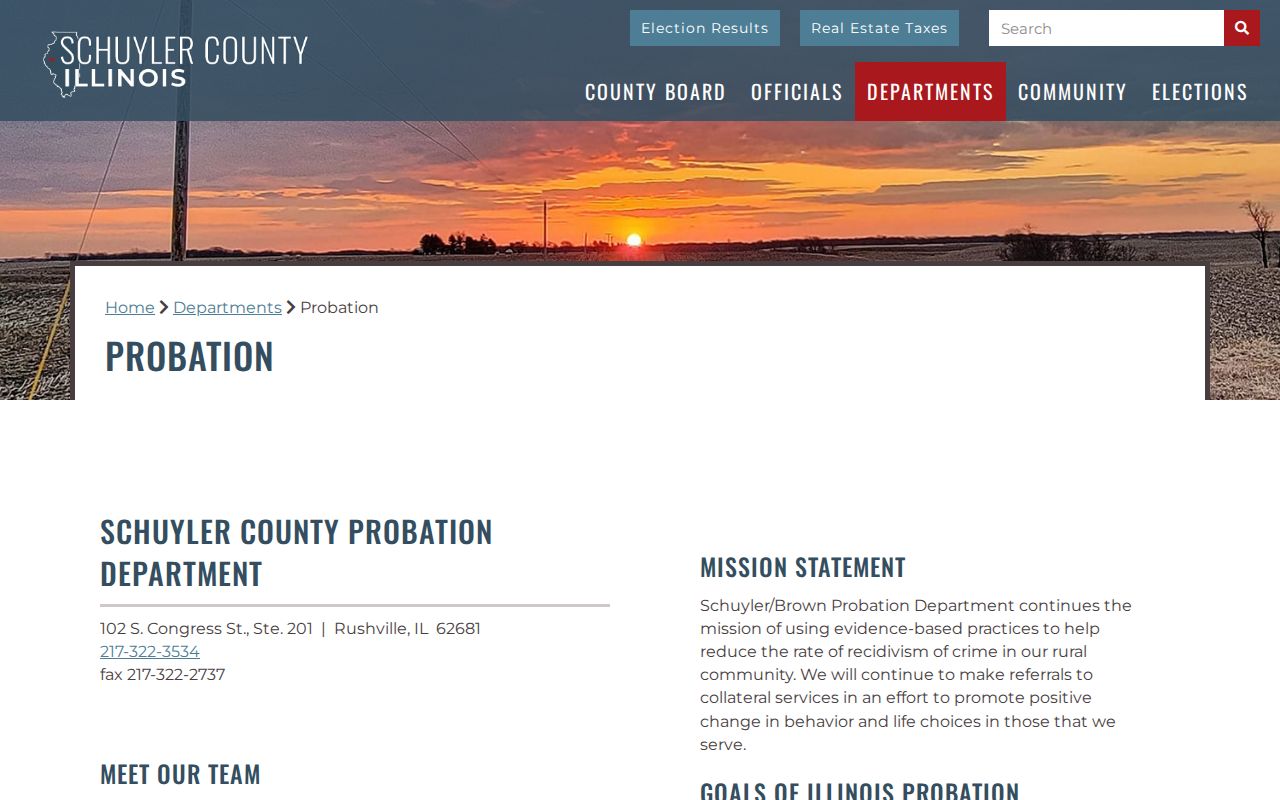
The shared-office schedule is a local routing detail. It does not function as a statewide public probation lookup.
Schuyler Supervision Violations
Conditions depend on the governing order. They can require reporting, approved movement, program participation, or compliance with other case-specific terms. A claimed violation is not a new conviction. A person held on an alleged parole violation may receive preliminary and final proceedings, and the Illinois Prisoner Review Board publishes separate hearing and result materials.
A warrant or absconder notation means the agency alleges that lawful reporting stopped or supervision terms were breached. It does not identify the person's current physical location. Report a possible parole absconder to local law enforcement or IDOC at 217-558-2200. Do not infer that status from a missed search result. For local probation, consult the case docket for a petition, warrant, hearing, and final order.
The PRB revocation-results page can document a Board result when one has been posted.
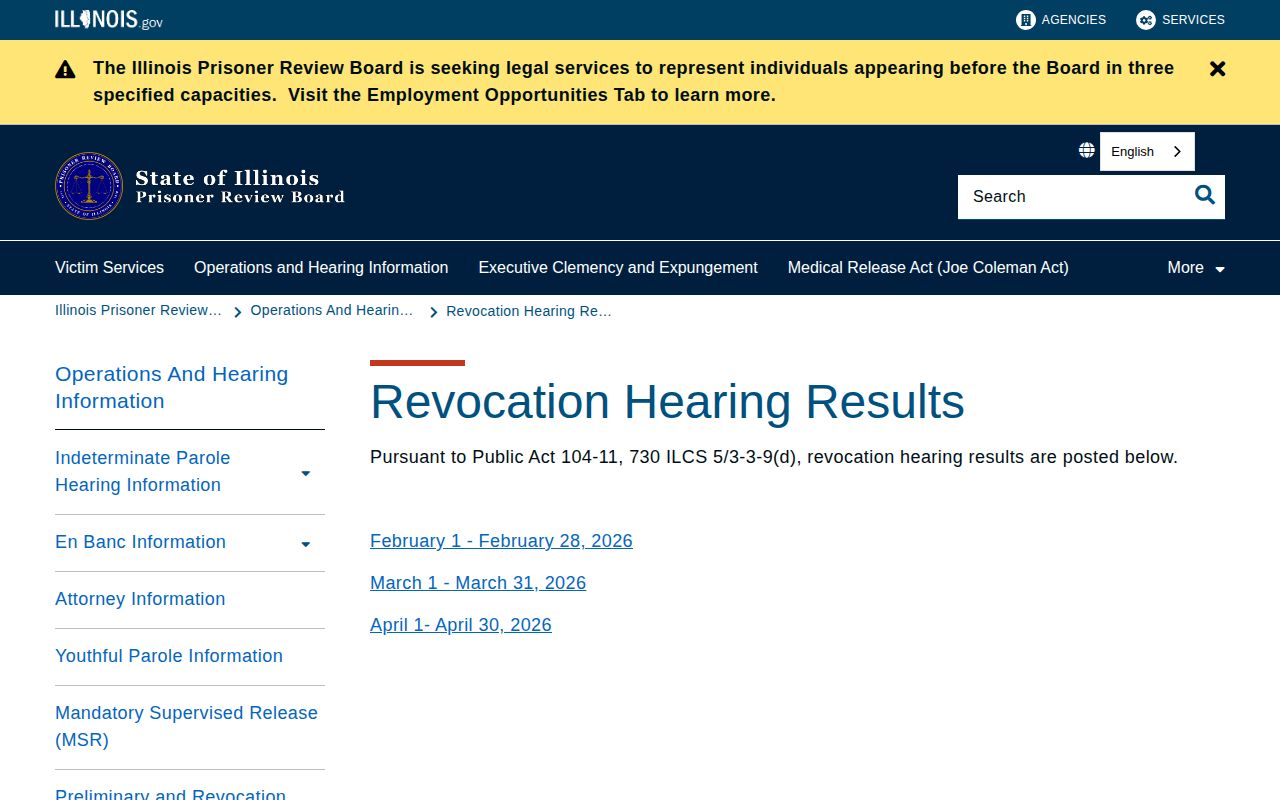
Publication can lag. Cross-check the result with IDOC status and the date of the record.
Schuyler Supervision Discharge Records
Supervision ends through a documented discharge or termination, not merely because a name disappears online. For IDOC, the Projected Discharge Date estimates the end of jurisdiction and can change. When the entire sentence is complete, IDOC says the person drops from its live public search. Archived releasable admission, release, and sentence data can then be requested through the IDOC Record Search route or FOIA.
For Schuyler County probation, look for a discharge or termination entry in the court docket and obtain the order when formal proof is needed. A phone call that goes unanswered proves nothing. The broader Schuyler County released-inmate search explains how to pair a court outcome with the jail or corrections release transaction.
Sealing or expungement is a separate court process under 20 ILCS 2630/5.2. It should never be used as a synonym for discharge, pardon, or completion of supervision.
When a person later vanishes from the live IDOC search, use the archived Record Search route with full name, birth date, year received, institution if known, committing county, and relevant dates. A narrow FOIA request can seek releasable admission, release, and sentence fields. Keep the date of the earlier parole profile because a past display and a later archived response describe different stages of the same record.
Schuyler Parole Hearing Records
The PRB parole interview lists are published by month. Its yearly en banc calendar covers full-Board votes in indeterminate and youthful-parole matters. A name on a schedule means consideration, not release or even a favorable result.
Decision research requires more than one Board page. Current en banc results, past parole grants, and revocation results serve different purposes. The current page was incomplete on the research date, while the past registry contains grants rather than a full set of denials and deferrals. Read the specific result document, note its publication date, and then verify actual custody or parole status through IDOC.
The official past-paroles registry provides a useful record of grants.
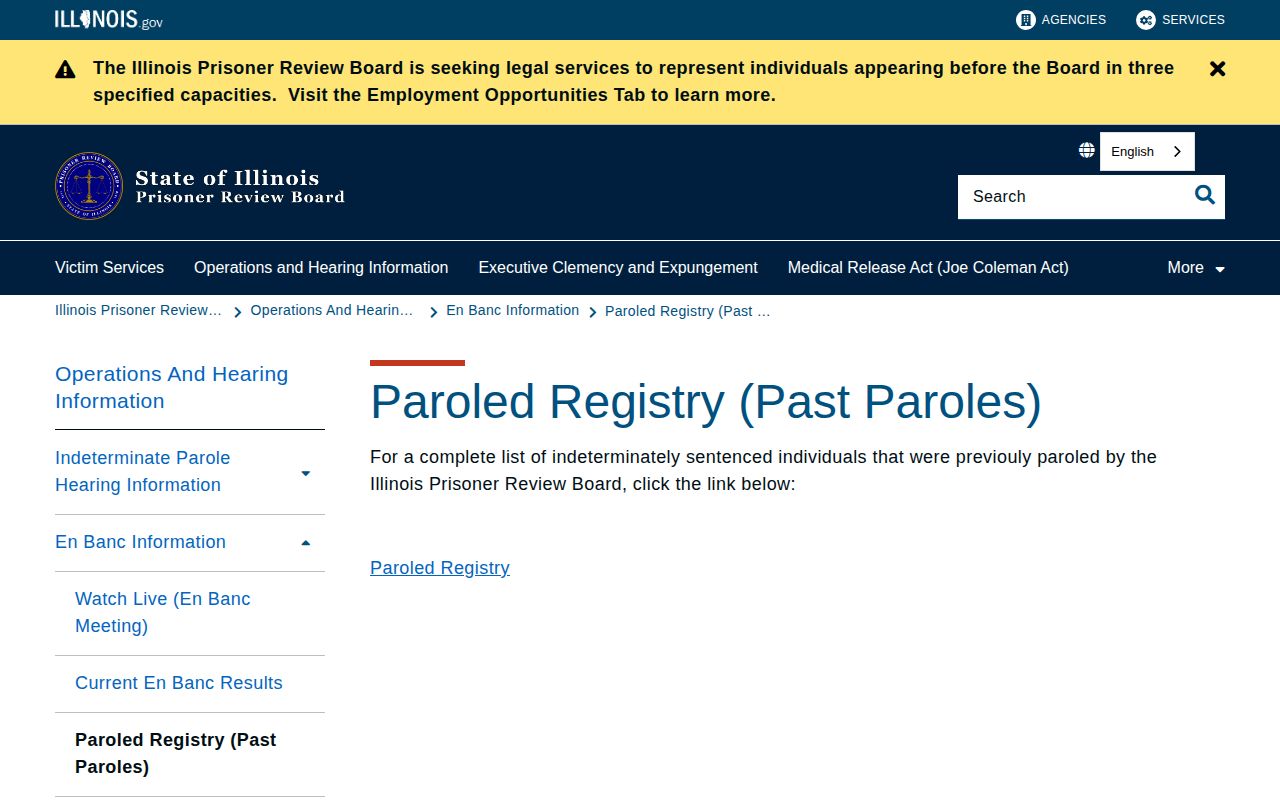
Because it is grants-only, absence from that registry does not prove that no hearing took place.
Eligibility is sentence-specific. 730 ILCS 5/3-3-3 governs indeterminate parole, while 730 ILCS 5/5-4.5-115 covers youthful parole review with exclusions. Most modern determinate sentences proceed to statutory MSR, so a general “first parole date” cannot be assigned to every Illinois prison term.
The Board and IDOC answer different questions. A PRB document can show a grant, denial, deferral, condition, or revocation decision. IDOC supplies the operational status and sentence dates. When the two pages appear to conflict, compare their event and update dates, then ask the responsible agency to explain the current state rather than merging the labels.